

GRE Updated Exam Dumps [2022] Practice Valid Exam Dumps Question
GRE Sample with Accurate & Updated Questions
NEW QUESTION 87
For absolute dating of archeological artifacts, the radiocarbon method emerged during the latter half of the twentieth century as the most reliable and precise method. The results of obsidian (volcanic glass) dating, a method based on the belief that newly exposed obsidian surfaces absorb moisture from the surrounding atmosphere at a constant rate, proved uneven. It was initially thought that the thickness of the hydration layer would provide a means of calculating the time elapsed since the fresh surface was made. But this method failed to account for the chemical variability in the physical and chemical mechanism of obsidian hydration. Moreover, each geographic source presented unique chemical characteristics, necessitating a trace element analysis for each such source. Yet despite its limitations, obsidian dating helped archeologists identify the sources of many obsidian artifacts, and to identify in turn ancient exchange networks for the flow of goods. Nor were ceramic studies and fluoride analysis supplanted entirely by the radiocarbon method, which in use allows for field labeling and laboratory errors, as well as sample contamination. In addition, in the 1970s, dendrochronological (tree-ring) studies on the bristle cone pine showed that deviation from radiocarbon values increases as one moves back in time. Eventually calibration curves were developed to account for this phenomenon; but in the archeological literature we still find dual references to radiocarbon and sidereal, or calendar, time.
The author mentions all of the following as problems with radiocarbon dating EXCEPT for
- A. contamination of artifacts
- B. identification errors by archeological field workers
- C. deterioration of samples
- D. mistakes by laboratory workers
- E. disparities with the calendar dating system
Answer: C
Explanation:
Explanation/Reference:
Explanation:
In the second paragraph, the author mentions choices (A), (C), (D), and E as problems with radiocarbon dating. Nowhere in the passage, however, does the author mention any problem involving sample deterioration
NEW QUESTION 88
Kirk sent $54 to the newspaper dealer for whom he delivers papers, after deducting a 10% commission for himself. If newspapers sell for 40 cents each, how many papers did Kirk deliver?
- A. 0
- B. 1
- C. 2
- D. 3
- E. 4
Answer: D
Explanation:
Explanation/Reference:
Explanation:
$54 is 90% of what Kirk collected. Express this as an equation:
Kirk collected $60. If each paper sells for 40 cents, the number of paper Kirk sold is:
NEW QUESTION 89
Conflict had existed between Spain and England since the 1570s. England wanted a share of the wealth that Spain had been taking from the lands it had claimed in the Americas.
Elizabeth I, Queen of England, encouraged her staunch admiral of the navy, Sir Francis Drake, to raid Spanish ships and towns. Though these raids were on a small scale, Drake achieved dramatic success, adding gold and silver to England's treasury and diminishing Spain's omnipotence. Religious differences also caused conflict between the two countries. Whereas Spain was Roman Catholic, most of England had become Protestant.
King Philip II of Spain wanted to claim the throne and make England a Catholic country again. To satisfy his ambition and also to retaliate against England's theft of his gold and silver, King Philip began to build his fleet of warships, the Armada, in January 1586.
Philip intended his fleet to be indestructible. In addition to building new warships, he marshaled one hundred and thirty sailing vessels of all types and recruited more than nineteen thousand robust soldiers and eight thousand sailors. Although some of his ships lacked guns and others lacked ammunition, Philip was convinced that his Armada could withstand any battle with England. The martial Armada set sail from Lisbon, Portugal, on May 9,1588, but bad weather forced it back to port. The voyage resumed on July 22 after the weather became more stable. The Spanish fleet met the smaller, faster, and more maneuverable English ships in battle off the coast of Plymouth, England, first on July 31 and again on August 2. The two battles left Spain vulnerable, having lost several ships and with its ammunition depleted. On August 7, while the Armada lay at anchor on the French side of the Strait of Dover, England sent eight burning ships into the midst of the Spanish fleet to set it on fire. Blocked on one side, the Spanish ships could only drift away, their crews in panic and disorder. Before the Armada could regroup, the English attacked again on August 8. Although the Spaniards made a valiant effort to fight back, the fleet suffered extensive damage.
During the eight hours of battle, the Armada drifted perilously close to the rocky coastline. At the moment when it seemed that the Spanish ships would be driven onto the English shore, the wind shifted, and the Armada drifted out into the North Sea. The Spaniards recognized the superiority of the English fleet and returned home, defeated The two battles left the Spanish fleet ____.
- A. open to attack
- B. open to change
- C. defeated
- D. triumphant
- E. discouraged
Answer: A
NEW QUESTION 90
In the xy-plane, the graph of a certain quadratic function has a single x-intercept and passes through the point (2.8). If the x-intercept of the graph is - X what is its y-intercept?
A)
B)
C)
D)
E)
- A. Option
- B. Option
- C. Option
- D. Option
- E. Option
Answer: E
NEW QUESTION 91
SULLEN : BROOD
- A. lethargic : cavort
- B. docile : obey
- C. regal : cringe
- D. despondent : laugh
- E. poised : blunder
Answer: B
Explanation:
Explanation/Reference:
Explanation:
NEW QUESTION 92
Mary Beard notes that the classical past has never been________ by only one political tendency or party: the classics have been used in support of revolutions as well as dictatorships.
- A. forsworn
- B. co-opted
- C. relinquished
- D. critiqued
- E. endured
Answer: D
NEW QUESTION 93
The poet Paul Laurence Dunbar (1872-1906) was the premier Black writer of poetry that used the dialect of rural African Americans of the southern United States. Although Dunbar's works were both popular with readers and acclaimed by literary critics during his lifetime, after the First World War a radical shift occurred, at least in critical opinion of his poetry, and twentieth-century critical evaluation of his work has been generally negative. Some critics attacked his work on social grounds for failing to challenge plantation stereotypes of African Americans. Other critics, such as the poet James Weldon Johnson, argued from aesthetic grounds that dialect poetry in general was too limited as an artistic medium, and capable of producing only two effects: pathos and humor. The negative critical trend only began to reverse itself in the
1970s, when scholars began to emphasize the importance of mythic, psychological, and historical dimensions of Dunbar's works, focusing on the interior and exterior realities of African American life after the Civil War.
Which of the following general criticisms of dialect poetry is mentioned in the passage?
- A. Dialect poetry fails to represent mythic, psychological, and historical dimensions of experience.
- B. Dialect poetry has only a limited degree of popular appeal
- C. The use of dialect in poetry tends to perpetuate plantation stereotypes of African Americans.
- D. Dialect poetry is highly limited in the number of artistic effects it can produce.
- E. Dialect poetry too often uses only the dialect of African Americans living in rural areas of the southern United States.
Answer: D
NEW QUESTION 94
RECTITUDE:
- A. intellectual uncertainty
- B. lack of self-confidence
- C. ethical dilemma
- D. difference of opinion
- E. moral weakness
Answer: E
Explanation:
Explanation/Reference:
Explanation:
RECTITUDE means "moral virtue or strength." Choice D provides an ideal antonym.
NEW QUESTION 95
A certain train will travel from City A to City B. and then back to City A along the same route. The train is scheduled to spend a total of T hours traveling lime for the round-trip. The train travels from City A to City B in 13 hours, traveling at an average speed of 25 miles per hour. If the train is to arrive exactly on schedule, at what average speed must the train travel from City B to City A ?
- A.

- B.

- C.

- D.
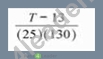
- E.
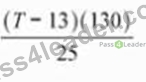
Answer: A
NEW QUESTION 96
INFLATE : BIGGER
- A. elongate : shorter
- B. meditate : higher
- C. fluctuate : longer
- D. diminish : smaller
- E. revere : lower
Answer: D
Explanation:
Explanation/Reference:
Explanation:
NEW QUESTION 97
Instances of "galactic cannibalism"-mergers in which large galaxies completely consume smaller ones-may be fairly common. Tidal forces produced by the Milky Way's powerful gravity, for example, appear to be dismantling and engulfing a dwarf galaxy in the constellation Sagittarius, producing large clumps and streamers of stars connecting the two galaxies. Astronomers have also observed two dense clusters of stars and gas at the heart of the Andromeda galaxy, an apparent "double nucleus" that may contain the remnant of a cannibalized dwarf galaxy. But this Twin-lobed appearance could also be created by two parts of a single nucleus bisected by a lane of dust. Scientists believe that only about 25 percent of such apparent double nuclei actually represent galactic cannibalism. Many of the rest result from the illusion of proximity that occurs when objects at different distances appear along the same line of sight: others consist of debris from galactic
"collisions." in which one galaxy has passed through another without merging, causing waves of new star formation.
According to the passage, a true double nucleus may be produced by the
- A. incorporation of a dwarf galaxy into a larger galaxy
- B. merging of two galaxies of approximately equal size
- C. separation of a single nucleus into two parts by a lane of dust
- D. waves of new star formation resulting from an instance of galactic cannibalism
- E. collision of two dwarf galaxies
Answer: C
NEW QUESTION 98
The village of Vestmannaeyjar, in the far northern country of Iceland, is as bright and clean and up-to-date as any American or Canadian suburb. It is located on the island of Heimaey, just off the mainland. One January night in 1973, however, householders were shocked from their sleep. In some backyards red-hot liquid was spurting from the ground.
Flaming "skyrockets" shot up and over the houses. The island's volcano, Helgafell, silent for seven thousand years, was violently erupting! Luckily, the island's fishing fleet was in port, and within twenty-four hours almost everyone was ferried to the mainland. But then the agony of the island began in earnest. As in a nightmare, fountains of burning lava spurted three hundred feet high. Black, baseball-size cinders rained down. An evilsmelling, eye-burning, throat-searing cloud of smoke and gas erupted into the air, and a river of lava flowed down the mountain. The constant shriek of escaping steam was punctuated by ear- splitting explosions. As time went on, the once pleasant village of Vestmannaeyjar took on a weird aspect.
Its street lamps still burning against the long Arctic night, the town lay under a thick blanket of cinders. All that could be seen above the ten-foot black drifts were the tips of street signs. Some houses had collapsed under the weight of cinders; others had burst into flames as the heat ignited their oil storage tanks. Lighting the whole lurid scene, fire continued to shoot from the mouth of the looming volcano. The eruption continued for six months. Scientists and reporters arrived from around the world to observe the awesome natural event. But the town did not die that easily. In July, when the eruption ceased, the people of Heimaey Island returned to assess the chances of rebuilding their homes and lives. They found tons of ash covering the ground. The Icelanders are a tough people, however, accustomed to the strange and violent nature of their Arctic land. They dug out their homes. They even used the cinders to build new roads and airport runways. Now the new homes of Heimaey are warmed from water pipes heated by molten lava.
Black cinders fell that were the size of ...
- A. hail-stones
- B. footballs
- C. golf balls
- D. pebbles
- E. baseballs
Answer: E
Explanation:
Explanation/Reference:
Explanation:
NEW QUESTION 99
The graph summarizes the responses from 4.500 respondents who rated their degree of confidence in each of eight United States institutions. Each respondent gave each institution one of five confidence ratings: high, moderate, little, none, or undecided.
If 20 percent of the respondents rated both their degree of confidence in the federal government and their degree of confidence in the news media high or moderate, what percent of the respondents gave neither of these institutions a confidence rating of high or moderate?
- A. 35%
- B. 50%
- C. 45%
- D. 40%
- E. 55%
Answer: D
Explanation:
Explanation
The graph summarizes the responses from 4.500 respondents who rated their degree of confidence in each of eight United States institutions. Each respondent gave each institution one of five confidence ratings: high, moderate, little, none, or undecided.
NEW QUESTION 100
Always read the meter dials from the right to the left. This procedure is much easier, especially if any of the dial hands are near the zero mark. If the meter has two dials, and one is smaller than the other, it is not imperative to read the smaller dial since it only registers a small amount. Read the dial at the right first. As the dial turns clockwise, always record the figure the pointer has just passed. Read the next dial to the left and record the figure it has just passed. Continue recording the figures on the dials from right to left. When finished, mark off the number of units recorded. Dials on water and gas meters usually indicate the amount each dial records.
When you have finished reading the meter, mark off ...
- A. the last reading of the month
- B. all the zero marks
- C. the number of units recorded
- D. the total figures
- E. the figures on the small dial
Answer: C
Explanation:
Explanation/Reference:
Explanation:
NEW QUESTION 101
The qualities expected of a professional musician seem _______, for she must be studious, disciplined, and technically impeccable while bringing passion and _______ to each performance.
- A. eclectic . . impulsiveness
- B. paradoxical . . spontaneity
- C. ambiguous . . capriciousness
- D. multifarious . . virtuosity
- E. unattainable . . emotion
Answer: B
Explanation:
Explanation/Reference:
Explanation:
Discipline, studiousness, and technical precision are generally thought of as contrary to "passion." So, the sentence suggests that a professional musician must possess contradictory or opposing qualities. The word paradoxical captures the sense of contradiction, while the spontaneity fits nicely with "passion" and contrasts appropriately with "disciplined."
NEW QUESTION 102
Charles A Lindbergh is remembered as the first person to make a nonstop solo flight across the Atlantic, in 1927. This feat, when Lindbergh was only twenty-five years old, assured him a lifetime of fame and public attention. Charles Augustus Lindbergh was more interested in flying airplanes than he was in studying. He dropped out of the University of Wisconsin after two years to earn a living performing daredevil airplane stunts at country fairs. Two years later, he joined the United States Army so that he could go to the Army Air Service flight-training school. After completing his training, he was hired to fly mail between St. Louis and Chicago. Then came the historic flight across the Atlantic. In 1919, a New York City hotel owner offered a prize of $25,000 to the first pilot to fly nonstop from New York to Paris. Nine St. Louis business leaders helped pay for the plane Lindbergh designed especially for the flight. Lindbergh tested the plane by flying it from San Diego to New York, with an overnight stop in St. Louis. The flight took only
20 hours and 21 minutes, a transcontinental record. Nine days later, on May 20,1927, Lindbergh took off from Long Island, New York, at 7:52 A M He landed at Paris on May 21 at 10:21 P M He had flown more than 3,600 miles in less than thirty four hours. His flight made news around the world. He was given awards and parades everywhere he went. He was presented with the U S Congressional Medal of Honor and the first Distinguished Flying Cross. For a long time, Lindbergh toured the world as a U S goodwill ambassador. He met his future wife, Anne Morrow, in Mexico, where her father was the United States ambassador. During the 1930s, Charles and Anne Lindbergh worked for various airline companies, charting new commercial air routes. In 1931, for a major airline, they charted a new route from the east coast of the United States to the Orient. The shortest, most efficient route was a great curve across Canada, over Alaska, and down to China and Japan. Most pilots familiar with the Arctic did not believe that such a route was possible. The Lindberghs took on the task of proving that it was. They arranged for fuel and supplies to be set out along the route. On July 29, they took off from Long Island in a specially equipped small seaplane. They flew by day and each night landed on a lake or a river and camped. Near Nome, Alaska, they had their first serious emergency. Out of daylight and nearly out of fuel, they were forced down in a small ocean inlet. In the next morning's light, they discovered they had landed on barely three feet of water. On September 19, after two more emergency landings and numerous close calls, they landed in China with the maps for a safe airline passenger route. Even while actively engaged as a pioneering flier, Lindbergh was also working as an engineer.
In 1935, he and Dr. Alexis Carrel were given a patent for an artificial heart. During World War I in the
1940s, Lindbergh served as a civilian technical advisor in aviation.
Although he was a civilian, he flew over fifty combat missions in the Pacific. In the 1950s, Lindbergh helped design the famous 747 jet airliner. In the late 1960s, he spoke widely on conservation issues. He died August 1974, having lived through aviation history from the time of the first powered flight to the first steps on the moon and having influenced a big part of that history himself.
When did Charles meet Anne Morrow?
- A. after he worked for an airline
- B. before he was forced down in an ocean inlet
- C. when visiting his parents
- D. after he received the first Distinguished Flying Cross
- E. before he took off from Long Island
Answer: D
Explanation:
Explanation/Reference:
Explanation:
NEW QUESTION 103
Proponents of urban development oppose the popular notion that socialpsychological mechanisms leading to criminal and other antisocial activity are more likely to _______ if _______ such as anonymity and population density are found.
- A. react . . factors
- B. emerge . . traits
- C. fail . . criminals
- D. disappear . . problems
- E. function . . cities
Answer: B
Explanation:
Explanation/Reference:
Explanation:
Proponents of urban development would oppose the idea that urban development fosters crime. So the
"mechanism" referred to in the sentence might either function, react, or emerge, but not disappear or fail.
The sentence cites anonymity and population density as examples of the second missing word. It makes no sense to characterize these examples either as cities or criminals, and of the two remaining choices, choice B is weaker than choice A on two counts. First, the sentence as a whole does not strongly support the use of the word react; what the mechanisms might react to is neither stated nor inferred in the sentence. Second, while a trait is properly referred to as "found," a factor is not (factors typically "come into play"). So choice B makes for an improper idiomatic expression.
NEW QUESTION 104
Greenberg's book presents a very good argument that there is something not quite (i)_________in the science community's perennial lament over inadequate budgets. Although the lament (ii)_________fears over looming shortages of scientifically trained personnel, the reality. Greenberg argues, is that government support for science and engineering has never been greater, with budgets continuing to grow every year-even through the past decade, when the climate for government spending generally has not been (iii)_________one.
- A. an expansive
- B. a forbiddine
- C. Understates
- D. forthright
- E. original
- F. encourages
- G. sophisticated
- H. alleviates
- I. a perilous
Answer: A,D,F
NEW QUESTION 105
......
Pass Admission Tests GRE Premium Files Test Engine pdf - Free Dumps Collection: https://www.pass4leader.com/Admission-Tests/GRE-exam.html
GRE Exam Info and Free Practice Test | Pass4Leader: https://drive.google.com/open?id=1lO7pd-UP-RFfcVnc6M_2JYp1teZtyHgJ